Physical Address
304 North Cardinal St.
Dorchester Center, MA 02124
Physical Address
304 North Cardinal St.
Dorchester Center, MA 02124
Stories That Keep You Informed
Stories That Keep You Informed
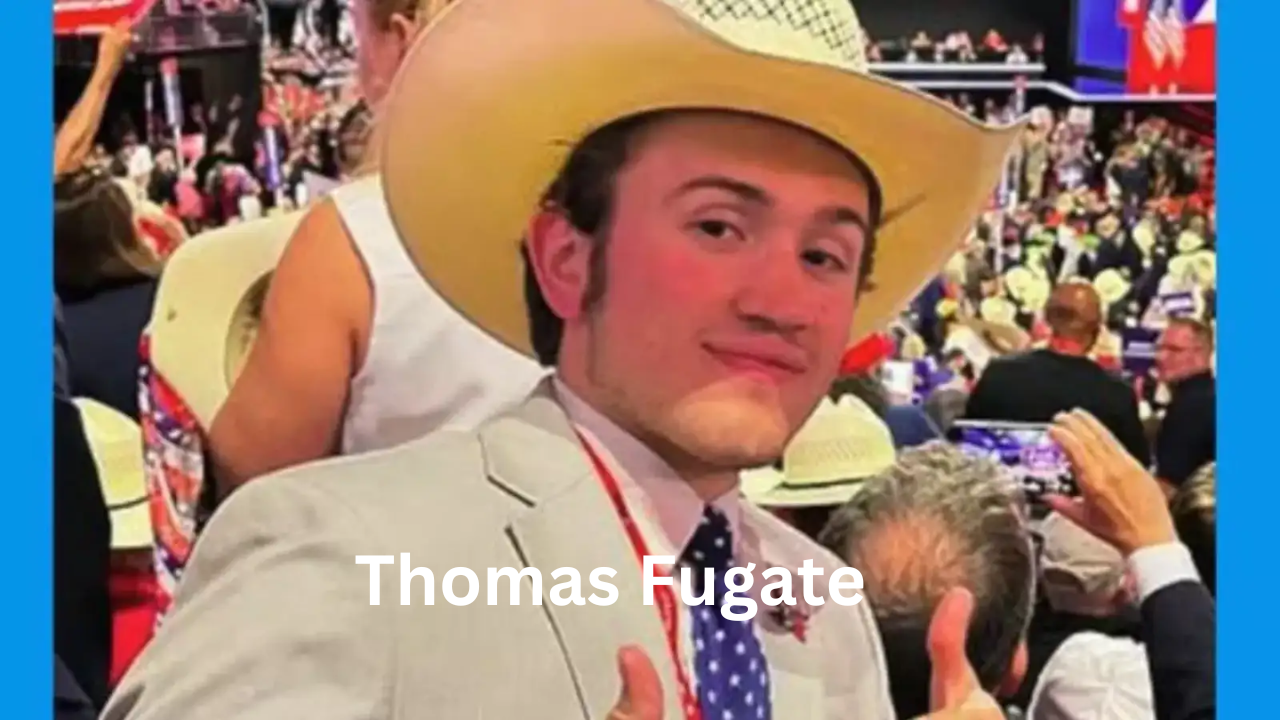
Thomas Fugate became a widely discussed name in American politics and national security after his rapid rise from recent college graduate to a leadership position within the U.S. Department of Homeland Security. His appointment attracted significant attention because of his young age, political background, and limited experience in traditional national security work.
Although Thomas Fugate was not widely known to the public before 2025, reports about his career quickly generated interest across the United States. His story combines higher education, political internships, campaign work, and a fast transition into federal government service.
This article explores who Thomas Fugate is, his education, early career, political involvement, DHS position, and the controversy surrounding his appointment.
Thomas Fugate III is an American political figure and federal government official who gained national attention in 2025 after taking a leadership role at the Department of Homeland Security.
Fugate graduated from the University of Texas at San Antonio (UTSA) in 2024 with a degree in politics and law. Soon afterward, his career moved rapidly into federal government and national politics.
According to reporting from ProPublica, Fugate was 22 years old when he was placed in charge of the Department of Homeland Security’s Center for Prevention Programs and Partnerships, commonly known as CP3. The center focuses on preventing terrorism and targeted violence through partnerships, training, grants, and community-based prevention programs.
His appointment was notable not only because of his age but also because he had entered government service relatively recently. That combination made Thomas Fugate a subject of considerable media attention and public debate.
Education played an important role in Fugate’s early career. He attended the University of Texas at San Antonio, where he studied politics and law.
He graduated in 2024, reportedly earning his degree with high academic honors. His university background gave him a foundation in political systems, government, and law, areas that later became relevant to his work in Washington.
Before completing college, Fugate also participated in programs and internships that helped connect him with the political world. One notable experience was the Archer Fellowship program, which gives university students opportunities to gain firsthand experience in Washington, D.C.
His education and internships helped him develop relationships within conservative political circles and provided an entry point into professional politics.
Before entering the federal government, Thomas Fugate had a career path that was quite different from his later position.
Media reports have noted that he previously worked at H-E-B, a major Texas grocery retailer, and also operated a small landscaping business. These jobs were far removed from the national security world, making his later career progression particularly striking.
During college, Fugate increasingly became involved in politics and public policy. His internships and fellowship experiences allowed him to work around elected officials and conservative policy organizations.
He also spent time working with political and nonprofit organizations. His résumé included internships associated with Texas lawmakers and the Heritage Foundation, a prominent conservative think tank.
These experiences helped establish a political network that later became important to his move into federal government.
Thomas Fugate’s political profile became more prominent through his support for Donald Trump.
Fugate worked on Donald Trump’s 2024 presidential campaign as an advance team member. He also participated in the Republican National Convention as an alternate delegate, further demonstrating his involvement in the Republican political movement.
His political activity was an important part of the discussion surrounding his later government appointment. Supporters viewed his political experience and work ethic as valuable qualifications, while critics questioned whether political experience could substitute for specialized national security expertise.
After Trump returned to the White House in 2025, Fugate joined the Department of Homeland Security. His federal career moved forward quickly, eventually leading to his involvement with CP3.
The biggest turning point in Thomas Fugate’s career came when he joined the Department of Homeland Security.
Reports indicate that Fugate initially worked as a special assistant in an immigration and border security-related office. His time there placed him inside a major federal agency responsible for a broad range of national security and public safety responsibilities.
In 2025, Fugate was appointed to lead the Center for Prevention Programs and Partnerships.
CP3 is designed to support efforts aimed at preventing terrorism and targeted violence before such threats become attacks. Its work involves partnerships with communities, law enforcement, government agencies, educators, and other organizations.
The center has also been associated with federal funding and programs intended to strengthen local prevention efforts. That made Fugate’s position considerably more significant than his age and relatively recent graduation might initially suggest.
The appointment of Thomas Fugate attracted attention primarily because he was only 22 years old at the time.
National security leadership positions are often associated with individuals who have spent years working in intelligence, law enforcement, military affairs, counterterrorism, or related fields. Fugate’s professional background was comparatively short.
ProPublica reported that Fugate had no apparent national security expertise before assuming responsibility for the prevention center. That report became one of the main reasons his appointment received national attention.
Critics argued that leading a federal program dealing with terrorism prevention requires specialized knowledge and substantial experience.
Others focused on the political dimension of the appointment, noting Fugate’s work on Trump’s campaign and his connections within conservative politics.
The controversy therefore centered on two major questions: whether Fugate had sufficient professional experience for the position and whether his political connections played a major role in his rapid advancement.
The Center for Prevention Programs and Partnerships, or CP3, is a component of the Department of Homeland Security focused on preventing terrorism and targeted violence.
Rather than being primarily responsible for responding to attacks after they occur, prevention programs seek to identify risks and strengthen communities before violence happens.
Its activities have included areas such as:
According to reporting about the organization, CP3 had distributed substantial federal funding through multiple grant cycles. This makes leadership of the organization an important responsibility even though the office itself is not one of the largest components of DHS.
Politics has been a consistent part of Thomas Fugate’s professional development.
His interest in politics reportedly developed at a young age, and he became increasingly active during his college years. His internships exposed him to lawmakers, conservative organizations, and Washington policy networks.
His time at the Heritage Foundation was particularly notable because the organization is one of the most influential conservative think tanks in the United States.
Fugate’s political work eventually culminated in his participation in Trump’s 2024 presidential campaign. That experience gave him direct exposure to national political operations and helped accelerate his career.
For supporters, this background demonstrated initiative and political experience. For critics, it raised questions about whether political loyalty was being valued over specialized professional credentials.
One of the most important parts of the Thomas Fugate story is the broader debate over experience versus political opportunity.
A young government official can bring different advantages to an organization. Younger leaders may bring energy, familiarity with modern communication platforms, and a willingness to approach established systems differently.
At the same time, national security is an area where experience can be extremely valuable. Counterterrorism and targeted-violence prevention involve complex relationships among federal agencies, local governments, law enforcement organizations, researchers, and community groups.
That is why Fugate’s appointment generated criticism from people who believed the role required a deeper professional background.
The Department of Homeland Security defended Fugate’s capabilities, with officials pointing to his performance and work ethic in government. Reports also noted that the administration characterized CP3 as having a more limited role than some critics suggested.
The disagreement illustrates a larger issue in government: how much weight should be given to academic achievement, political experience, loyalty, management ability, and specialized expertise when selecting leaders?
Perhaps the most unusual part of Fugate’s biography is how quickly his career developed.
Within a relatively short period, he moved from working ordinary jobs in Texas to studying politics and law, completing internships, participating in national politics, joining DHS, and eventually taking on a leadership role.
Reports described the transition as unusually fast. His career trajectory became an example of how political networks and campaign experience can open doors in government.
At the same time, his story demonstrates that a person’s professional background can change dramatically within a few years.
Rather than following a traditional route through military service, intelligence agencies, law enforcement, or decades of public administration, Fugate’s path was heavily connected to politics, education, internships, and campaign work.
Public reaction to Thomas Fugate has been divided.
Some observers have criticized the decision to put such a young official in charge of a terrorism-prevention organization. Their concerns focus on his lack of long-term experience in national security and counterterrorism.
Others have emphasized that age alone does not determine someone’s ability to manage an organization. They argue that leadership skills, education, political understanding, and performance should also be considered.
The debate became especially intense because the position itself involves a sensitive subject. Terrorism prevention is closely connected to public safety, civil liberties, law enforcement, and government policy.
As a result, Fugate’s appointment became about more than one individual. It became part of a broader discussion about staffing decisions, political appointments, government expertise, and the role of young professionals in federal leadership.
Thomas Fugate’s story is significant because it shows how quickly a person can move through modern political and government institutions.
His journey from Texas employment and university studies to a federal leadership position attracted attention precisely because it happened so quickly.
It also demonstrates the importance of political networks in Washington. Internships, fellowships, campaign work, and relationships with policymakers can provide opportunities that are difficult to obtain through traditional employment routes.
At the same time, the controversy surrounding Fugate highlights why government appointments are closely scrutinized. When an official takes responsibility for a national security-related program, the public naturally wants to understand that person’s education, experience, qualifications, and professional background.
The long-term direction of Thomas Fugate’s career remains a subject of interest.
At such a young age, he has potentially decades of professional life ahead of him. His experience in federal government could become the foundation for a longer career in politics, public administration, policy, or national security.
Whether he remains in government or moves into another part of the political world, his early career has already attracted significant attention.
His future reputation will likely depend less on his age and more on what he accomplishes in the years ahead.
If Fugate demonstrates strong leadership and produces measurable results, his critics may reassess their initial concerns. If problems emerge, his appointment could instead be remembered as an example of the risks associated with placing inexperienced individuals in major government positions.
Thomas Fugate III is an American political figure and federal government official who gained national attention after being placed in a leadership position at the Department of Homeland Security’s Center for Prevention Programs and Partnerships.
Thomas Fugate was 22 years old when his DHS leadership role attracted widespread attention in 2025. Reports identify him as a recent graduate of the University of Texas at San Antonio.
Thomas Fugate attended the University of Texas at San Antonio, where he studied politics and law and graduated in 2024.
Thomas Fugate became associated with the U.S. Department of Homeland Security and was appointed to lead the Center for Prevention Programs and Partnerships, an organization focused on preventing terrorism and targeted violence.
Yes. Fugate worked on Donald Trump’s 2024 presidential campaign and was involved with the Republican National Convention before moving into federal government work.
His appointment attracted criticism mainly because of his young age and limited professional background in national security. Supporters, meanwhile, have pointed to his education, political experience, government work, and performance.
Thomas Fugate represents one of the more unusual career stories to emerge from American politics in recent years. His transition from a young college graduate in Texas to a federal official involved in terrorism prevention happened remarkably quickly.
His education at the University of Texas at San Antonio, political internships, work on Donald Trump’s 2024 campaign, and subsequent DHS career all contributed to his rapid rise.
At the center of the debate is a simple but important question: can youth, political experience, education, and leadership ability compensate for a lack of traditional national security experience?
There is no easy answer. Thomas Fugate’s future career and accomplishments will ultimately provide a better measure of his effectiveness than his age alone.
For now, his story remains an interesting example of how education, political involvement, networking, and government opportunities can combine to produce an unexpectedly rapid rise in public service.
Also Read: Andrew Tate: Biography, Career, Net Worth, Controversies, and Latest Legal Updates
You must be logged in to post a comment.



[…] Also Read: Thomas Fugate: Biography, Career, Education, DHS Role, and Why He Made Headlines […]