Physical Address
304 North Cardinal St.
Dorchester Center, MA 02124
Physical Address
304 North Cardinal St.
Dorchester Center, MA 02124
Stories That Keep You Informed
Stories That Keep You Informed
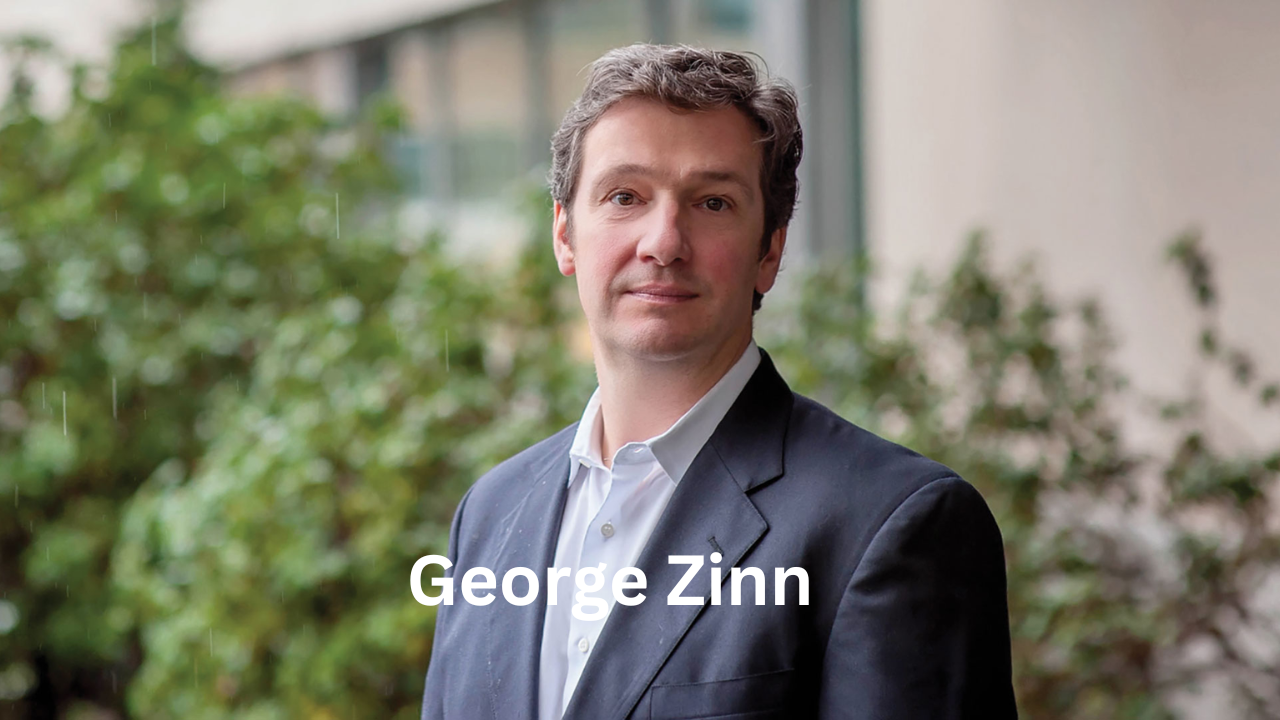
The name George Zinn became widely searched after a chaotic incident following the fatal shooting of conservative activist Charlie Kirk at Utah Valley University in Orem, Utah, on September 10, 2025. Zinn, a 71-year-old Utah resident, was initially taken into custody after reportedly telling authorities that he had shot Kirk. Investigators later determined that Zinn was not the shooter and that his statements had created confusion during an already chaotic investigation.
The incident quickly attracted national attention because videos of Zinn being detained circulated widely online. For a short time, people who saw those videos incorrectly believed that police had apprehended the person responsible for Kirk’s killing.
The subsequent investigation revealed a very different story. Zinn acknowledged that he had falsely claimed responsibility and said that his intention was to distract law enforcement from the actual suspect. His case later developed into a criminal proceeding involving obstruction of justice and separate charges involving child sexual exploitation.
In January 2026, Zinn’s case reached a significant conclusion when he pleaded no contest to a reduced obstruction charge and pleaded guilty to two counts of sexual exploitation of a minor. He was sentenced to prison, with the sentences ordered to run concurrently.
George Zinn is a Utah man who came into the national spotlight because of his actions immediately after the September 2025 shooting at Utah Valley University.
According to reporting and the Utah County Sheriff’s Office, Zinn was attending the event where Charlie Kirk was shot. Shortly after the gunfire, he allegedly approached law enforcement and claimed that he had shot Kirk.
That claim caused an immediate law-enforcement response. Officers took Zinn into custody while investigators attempted to determine whether he was connected to the shooting.
Authorities later established that Zinn had not fired the fatal shot. The Utah County Sheriff’s Office stated that Zinn eventually admitted he had falsely claimed to be the shooter in an attempt to interfere with the investigation and give the actual suspect an opportunity to escape.
This distinction is important when discussing George Zinn online. He was not identified as the person who killed Charlie Kirk. Instead, he became a separate defendant whose actions after the shooting resulted in an obstruction-of-justice case.
The circumstances surrounding George Zinn became significant because of how quickly he inserted himself into the investigation.
According to court reporting, roughly two minutes after the fatal shooting, Zinn began claiming that he was responsible. A UVU police detective questioned him about the location of the firearm, but Zinn did not provide a weapon and was eventually determined not to be the shooter.
The timing was particularly important. Law enforcement was dealing with a major crime scene, a large crowd, fleeing attendees and an unknown gunman. A false confession during those first moments could potentially redirect officers and consume resources that would otherwise be focused on securing the scene and locating the actual suspect.
The Utah County Sheriff’s Office later stated that Zinn admitted he had made the false claim specifically to hinder the investigation and allow the real suspect to flee. Authorities also said there was no evidence at that stage that Zinn had colluded with the actual shooter.
One of the most widely reported aspects of the George Zinn case was his statement to police immediately following the shooting.
According to court and police accounts, Zinn repeatedly claimed responsibility and asked officers to shoot him. When questioned about where the weapon was, he reportedly refused to identify its location.
Officers eventually realized that Zinn did not possess the firearm used in the attack. He was therefore quickly eliminated as the person who had fired the fatal shot.
Later, while receiving medical treatment, Zinn reportedly acknowledged that he had lied about being the shooter. Investigators said he explained that he wanted to draw attention away from the actual perpetrator and become a martyr.
Those statements became central to the obstruction case against him.
No. George Zinn was not identified as the shooter who killed Charlie Kirk.
This is one of the most important facts to understand when searching for George Zinn. His initial claim created confusion at the scene, and videos of his arrest circulated across social media. However, investigators determined that he was not responsible for the shooting.
The person charged in connection with Kirk’s killing was identified by authorities as Tyler Robinson. Zinn’s criminal case was separate from the homicide prosecution.
Because breaking-news information can change rapidly and social media posts can contain inaccurate claims, it is important to distinguish Zinn’s false statement from the actual criminal case involving the shooting.
Zinn’s false claim resulted in an obstruction-of-justice prosecution.
The original allegation was a second-degree felony. According to KSL’s report on the eventual sentencing, prosecutors alleged that Zinn intentionally attempted to hinder or delay the investigation by providing false information.
As part of a plea agreement, the obstruction charge was reduced to a third-degree felony. Zinn entered a no-contest plea to that charge in January 2026.
Judge Thomas Low sentenced him to zero to five years in prison for the obstruction conviction.
The case demonstrates why false claims made during an active criminal investigation can have serious consequences. Even though Zinn did not commit the shooting itself, authorities argued that his behavior interfered with the immediate law-enforcement response.
The investigation into George Zinn expanded beyond the false shooting confession.
While investigators were examining his potential connection to the shooting, authorities requested access to his phone. According to Utah County authorities and subsequent court reporting, Zinn disclosed that the device contained child sexual abuse material.
Investigators obtained a warrant and searched the phone. Authorities reported finding prohibited material, resulting in four counts of sexual exploitation of a minor being filed separately.
These allegations should be discussed carefully because they involve serious criminal conduct. The relevant legal outcome is that Zinn later pleaded guilty to two of the sexual-exploitation counts as part of the plea agreement. He received sentences of one to 15 years on those counts, with the sentences running concurrently with his obstruction sentence.
January 2026 marked the major legal turning point in the George Zinn case.
According to KSL, Zinn pleaded no contest to the reduced third-degree obstruction charge and guilty to two counts of sexual exploitation of a minor. The judge sentenced him to zero to five years for obstruction and two terms of one to 15 years for the sexual-exploitation convictions. The prison terms were ordered to run concurrently.
Deseret News likewise reported that Zinn entered the pleas in Utah’s 4th District Court and received the combined prison sentences.
This means that the case involving his false claim at the university did not end with his initial arrest. It developed into a broader criminal prosecution and ultimately resulted in prison sentences.
George Zinn had received attention in Utah before the 2025 university shooting.
Court reporting indicates that he had been arrested or charged numerous times over approximately three decades, with many incidents involving trespassing or disruptions connected to political events.
His previous legal history also includes a widely reported 2013 incident involving an email to organizers of the Salt Lake City Marathon. According to court reporting, Zinn asked whether organizers needed anyone to help place bombs near the finish line. He was subsequently charged with a terrorism-related offense.
These earlier incidents provide context for understanding why journalists examined Zinn’s background after his arrest at Utah Valley University. However, each incident should be considered separately rather than treating unrelated allegations as evidence of involvement in the 2025 shooting.
The George Zinn story illustrates how quickly information can become distorted during a breaking-news event.
Immediately after the shooting, videos showed police detaining Zinn. People watching those clips without additional context could reasonably assume that the person being arrested was the shooter.
That assumption was incorrect.
Authorities determined that Zinn had falsely claimed responsibility. His detention was connected to his statements at the scene rather than evidence that he had fired the fatal shot.
The situation highlights a common problem during major breaking-news events: early video footage often appears before investigators have established what actually happened.
For readers searching for George Zinn today, the distinction between initial reports, investigative findings, and final court outcomes is especially important.
Social media played a major role in the public understanding of the incident.
Short clips showing Zinn’s arrest circulated widely, and some viewers initially interpreted them as evidence that the killer had been captured. KSL reported that the video contributed to the mistaken belief that authorities had arrested the shooting suspect.
Later reporting clarified that Zinn was not the shooter.
This is a useful reminder for anyone researching George Zinn or other people involved in major breaking-news cases. A viral video may document a genuine event while still lacking the context needed to understand what actually happened.
Reliable reporting, court documents and official statements provide a much stronger basis for understanding the complete story.
George Zinn’s false confession was separate from the investigation into the person accused of killing Charlie Kirk.
Authorities eventually identified Tyler Robinson as the suspect in Kirk’s death. Zinn’s case remained focused on his own conduct, including obstruction and the separate sexual-exploitation charges.
This separation is important because early online discussions sometimes combined different people and events into one narrative.
The available court reporting makes clear that Zinn was prosecuted for his own actions and was not convicted of killing Kirk.
The George Zinn case offers several broader lessons about criminal investigations and breaking news.
First, statements made during an active investigation can have serious legal consequences. Zinn’s decision to falsely claim responsibility became the basis of an obstruction charge.
Second, viral footage does not necessarily explain an entire event. The videos showing Zinn being detained were authentic, but the initial assumptions surrounding those videos were incorrect.
Third, major criminal cases often involve multiple investigations happening at the same time. Zinn’s obstruction case and the homicide investigation were distinct matters.
Finally, readers should be cautious about repeating unverified claims. Official statements and later court proceedings can substantially change the understanding of an event.
George Zinn is a Utah man who gained national attention after falsely claiming responsibility for the shooting of Charlie Kirk at Utah Valley University in September 2025. Authorities determined that Zinn was not the shooter.
No. Investigators determined that George Zinn did not shoot Charlie Kirk. His own statements were treated as a false claim intended to interfere with the investigation.
Zinn was arrested after falsely claiming to be the shooter. Authorities said his statements diverted law-enforcement attention during the investigation. He was subsequently prosecuted for obstruction of justice.
In January 2026, Zinn pleaded no contest to a reduced third-degree obstruction charge and guilty to two counts of sexual exploitation of a minor. He received prison sentences that were ordered to run concurrently.
George Zinn was 71 years old when he was arrested following the September 2025 shooting at Utah Valley University.
The incident occurred at Utah Valley University in Orem, Utah, following the fatal shooting of Charlie Kirk during a Turning Point USA event on September 10, 2025.
George Zinn became a prominent name in online searches because of an unusual and highly consequential sequence of events following the killing of Charlie Kirk at Utah Valley University.
Although Zinn was initially seen being detained and claimed that he had committed the shooting, investigators determined that he was not the shooter. Instead, authorities said he intentionally made a false confession that interfered with the investigation. That conduct led to an obstruction-of-justice case.
The investigation also uncovered separate criminal allegations involving material found on his phone, ultimately resulting in guilty pleas to two sexual-exploitation charges. In January 2026, Zinn received concurrent prison sentences for those convictions and the reduced obstruction charge.
For anyone searching for George Zinn, the most important point is to separate the viral images and early confusion from the established legal record. Zinn was not convicted of killing Charlie Kirk. His criminal case centered on his false claim at the scene and the separate sexual-exploitation offenses for which he later pleaded guilty.
As with any high-profile criminal story, readers should rely on verified court reporting and official statements rather than unconfirmed social media claims when trying to understand what happened.
Also Read: Thomas Fugate: Biography, Career, Education, DHS Role, and Why He Made Headlines
You must be logged in to post a comment.

[…] Also Read: George Zinn: Who He Is, What Happened at Utah Valley University, and What We Know […]